
Back to Amino Acid Derivatives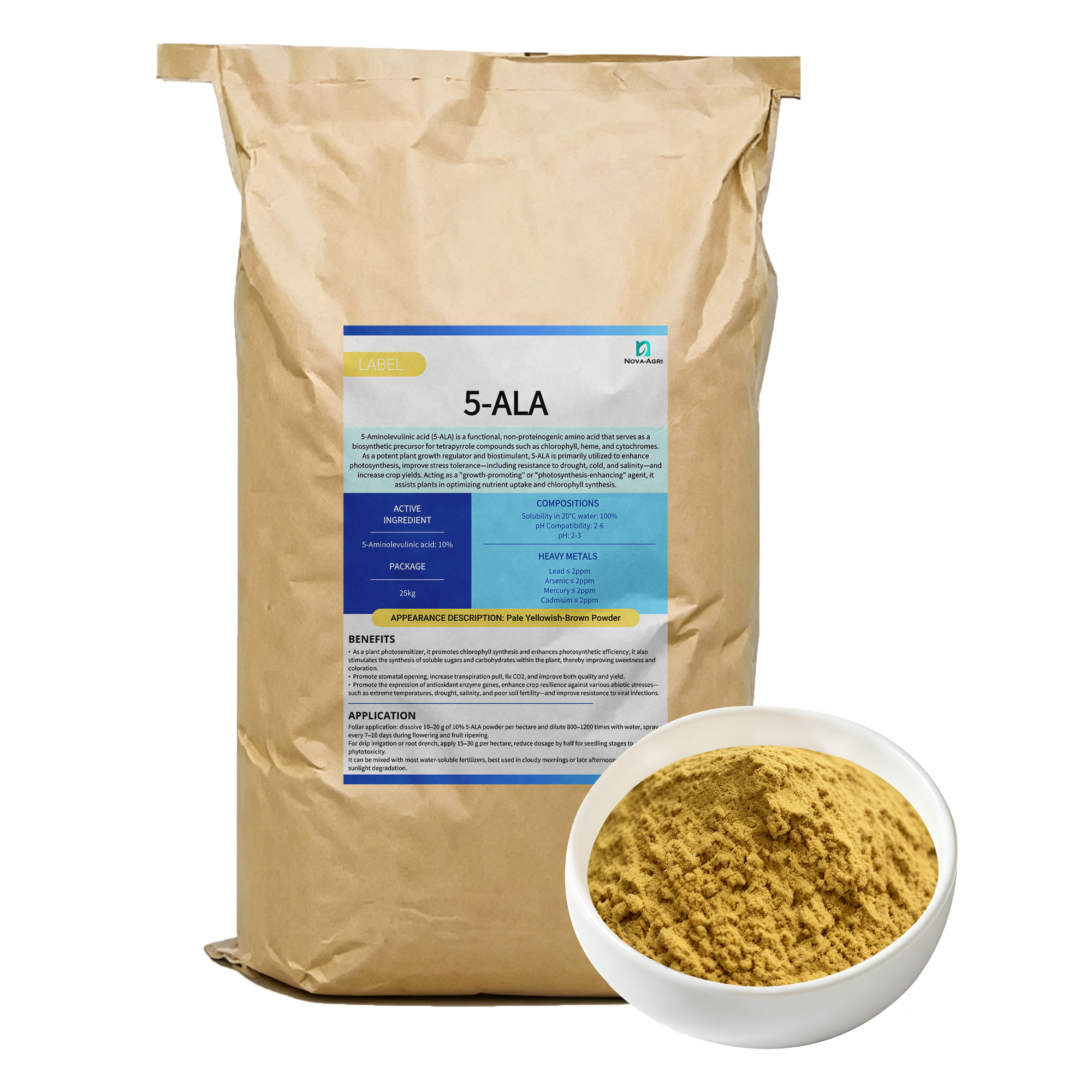
Amino Acid Derivatives
5-Aminolevulinic acid
Also known as: 5-ALA
5-Aminolevulinic acid (5-ALA) is a functional, non-proteinogenic amino acid that serves as a biosynthetic precursor for tetrapyrrole compounds such as chlorophyll, heme, and cytochromes. As a potent plant growth regulator and biostimulant, 5-ALA is primarily utilized to enhance photosynthesis, improve stress tolerance—including resistance to drought, cold, and salinity—and increase crop yields. Acting as a "growth-promoting" or "photosynthesis-enhancing" agent, it assists plants in optimizing nutrient uptake and chlorophyll synthesis.
Technical specifications
Package
25kg bag
Active Ingredient(s)
- 5-Aminolevulinic acid
- 10%
Physical and Chemical Properties
- Solubility in 20℃ water
- 100%
- pH Compatibility
- 3.0-5.5
- pH
- 3.0-5.0
- Appearance
- Pale Yellowish-Brown Powder
Heavy Metals
- Lead
- ≤ 5ppm
- Arsenic
- ≤ 3ppm
- Cadmium
- ≤ 1ppm
- Mercury
- ≤ 0.1ppm
Key benefits
- As a plant photosensitizer, it promotes chlorophyll synthesis and enhances photosynthetic efficiency; it also stimulates the synthesis of soluble sugars and carbohydrates within the plant, thereby improving sweetness and coloration.
- Promote stomatal opening, increase transpiration pull, fix CO2, and improve both quality and yield.
- Promote the expression of antioxidant enzyme genes, enhance crop resilience against various abiotic stresses—such as extreme temperatures, drought, salinity, and poor soil fertility—and improve resistance to viral infections.
Suggested dosage & application
- Foliar application Dissolve 10–20 g of 10% 5-ALA powder per hectare and dilute 800–1200 times with water, spray every 7–10 days during flowering and fruit ripening.
- For drip irrigation or root drench Apply 15–30 g per hectare; reduce dosage by half for seedling stages to avoid phytotoxicity.
Partner With Us
Need samples, COA, or formulation support?
Contact our export team for pricing, regulatory documentation, and tailored supply planning for 5-Aminolevulinic acid.
Start an inquiry